
Small tower construction, prime-contracted.
Carriers spend about $1M CAD on a full macro cell site, so they only build where thousands of subscribers justify it. If you need a tower for a WISP, a lodge, a campground or an industrial site, nobody's coming to build it for you. We build those towers.
A tower that can't see its backhaul target is a very expensive flagpole.
— Jonathan Nikkhah, on why the survey comes first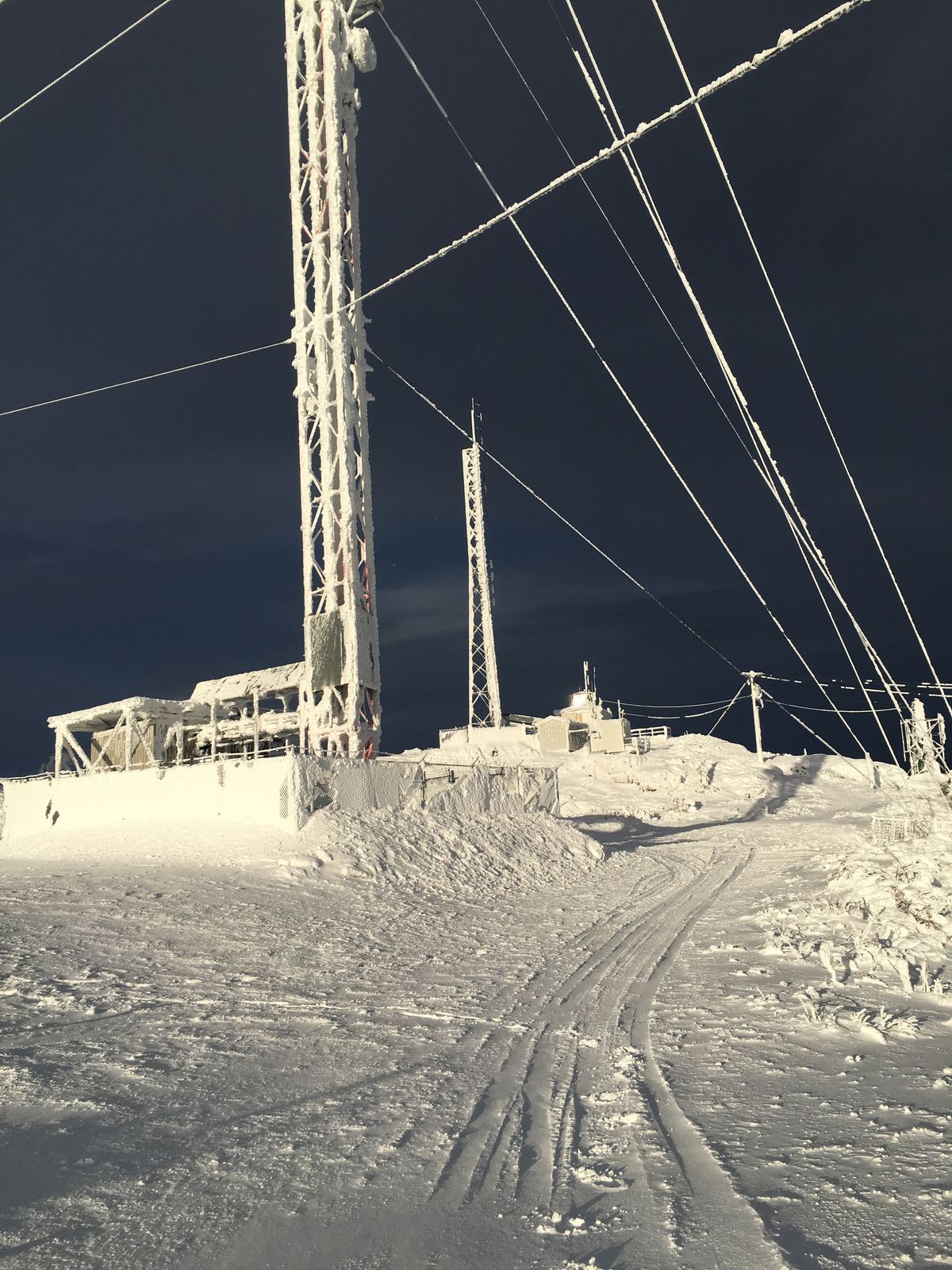
Who this is for
Small tower construction is for organizations with a connectivity problem that no carrier will solve. Wireless ISPs pushing coverage into a rural valley. Remote lodges that need reliable backhaul for guests and operations. First Nations communities building their own infrastructure. Campgrounds and marinas that lose every reservation once guests realize the WiFi dies at check-in. Industrial sites — mines, forestry camps, hydro projects — that need telemetry and crew comms where there's no grid and no coverage.
The common thread: you need real infrastructure, and the build is measured in the tens of thousands, not millions. That's exactly the band carriers skip. A carrier's full macro site runs about $1M CAD — land, permits, a 60-metre structure, commercial power, the whole system. A small build — a 20 to 40-metre tower or monopole, solar-battery power, a point-to-point backhaul link — is a fraction of that and serves exactly the people who actually need it.
How a build runs
1. Site survey. We walk the site, check line-of-sight paths, soil and access, and confirm power options. A tower that can't see its backhaul target is a very expensive flagpole — this step kills bad ideas early.
2. Design and permitting support. We spec the structure, foundation, grounding and power system to Canadian standards and help you work through ISED licensing, local permitting and — where it matters — community consultation. This is the slow part, and skipping it is how builds die.
3. Partner crew build. The structure goes up with partner rigging crews — people I've worked with for years in this industry. I've spent a decade on towers, including long-line and helicopter work, and I manage the build like a foreman, not a broker. Panel-tied electrical work is done by hired licensed electricians.
4. Commissioning. Antennas aligned, feedlines tested, grounding verified, power system exercised. You get a build that works on day one, with documentation of what was installed and how.
Why a prime contractor, not a generalist
Most tower builders in Canada are set up for carrier work — big sites, carrier contracts, carrier timelines. A small build from them comes with big-site overhead and a wait. We're set up for the small end on purpose: I find the job, scope it honestly, bring the right crew, and manage it start to finish.
Ten years in wireless — tower erection and removal to 500 feet, guyed towers, self-supports and monopoles, microwave alignment, antenna, fiber, DC and RF installs, remote-site specialist work for carriers, utilities and public agencies — is how you learn what a good build looks like from the steel up. "I built the towers your signal comes from" isn't a slogan. It's the resume.
Field note
I've hung under a helicopter on a long line with a tower section swinging below me. Managing a small build from the ground is the easy part of that life — which is exactly why the small jobs get my full attention. This is the work I know cold.
Honest framing on cost
A full carrier macro site costs about $1M CAD. Your small build will cost a fraction of that — but it will not be cheap, and anyone who quotes you a tower like it's a fence post is planning to surprise you later. Structure, foundation, power, backhaul, permitting: we price the whole thing up front. If the survey says your site won't work, we tell you that before you spend anything on design.
Commercial prime-contractor work — tower builds, maintenance, decommissioning and remote-site power — covers the whole service area: all of Vancouver Island, the Southern Gulf Islands, Sunshine Coast, Texada and the Discovery Islands, including boat-access west coast sites. See the Vancouver Island overview in detail, plus local pages for Campbell River and Nanaimo.
How much does a small tower build cost?
A fraction of the ~$1M CAD a full carrier macro site runs — but it won’t be cheap, and we price the whole thing up front: structure, foundation, power, backhaul, permitting. If the survey says your site won’t work, you hear it before spending anything on design.
Common questions
How long does a small tower build take?
Survey and design runs 2–6 weeks. The wildcard is permitting and ISED licensing — budget 2–6 months depending on your site and municipality. The physical build itself is usually days to two weeks on site. We hand you a realistic timeline at the survey stage, not an optimistic one.
Do I need permits for a small tower?
Usually yes. ISED governs spectrum and structure licensing, and most regional districts and municipalities have their own land-use process. Height, location and proximity to aerodromes all matter. We help you work through the paperwork — it's the least exciting and most important part of the job.
Guyed tower or self-support — which do I need?
Depends on height, loading (how many antennas and dishes), soil, and how much land you can spare for guy anchors. Guyed towers are cheaper per foot of height but need anchor radius. Self-supports cost more steel but fit tight sites. We spec it to the site, not to a catalogue.
Can the site run off-grid?
Yes, in most cases. Solar paired with battery storage and a generator for backup is the standard approach — our remote-site power page covers how we engineer those systems. Communications loads are steady and predictable, which is exactly what makes off-grid design dependable.
Who maintains the tower after it's built?
We do. Recurring tower maintenance contracts cover inspections, tensioning, corrosion control and antenna work — coastal structures need this on a schedule, not on hope.
What does "prime-contracted" mean for me?
One contract, one point of responsibility: us. The rigging crew, the electricians and the commissioning are all managed under that contract. You don't coordinate trades, chase certificates, or wonder who's responsible when something's wrong. We are.
Got a site that needs a tower?
Start with a conversation about the site — location, line-of-sight, power, what you need it to carry. We'll tell you straight whether it's a build, a different solution, or a bad idea.